




Services
Adria Art’s web platform already serves as the digital heart of one of Poland’s largest event brands, managing over 2,500 events a year.
The mobile app was the next natural step — bringing repertoire, tickets, loyalty, and account management into a single native experience on the phone people already carry.
About
We built Adria Art’s mobile app as a cross-platform companion to their existing web platform and backend — not a separate product, but a mobile layer for the same ecosystem.
The brief covered the full ticket-buying journey: browsing the repertoire, filtering by phrase, date, city and category, viewing an event’s page, buying and storing tickets as QR codes, and managing an account — plus a loyalty layer of points, quizzes, challenges and vouchers designed to keep people coming back between purchases.
Months from kickoff to launch on the App Store and Google Play
Shared React Native codebase across iOS and Android
Events managed yearly on the connected Adria Art platform
Brand’s challenges
The app couldn’t be a lightweight promotional shell sitting next to the business — it had to plug into a platform, backend and sales system that already existed and already worked.
That meant a dedicated mobile API contract rather than a bolted-on wrapper around the website, native platform integrations that a webview couldn’t deliver, and a push-notification system robust enough to support a real notification inbox — not just fire-and-forget alerts.
Cross-platform delivery also meant handling the parts of the job that don’t show up in a feature list: font-rendering differences between Android and iOS, OTP autofill behaviour, and the signing and release configuration that a production-grade native app has to get right on both platforms.
Our solutions
We built the app in React Native, sharing one codebase across iOS and Android, backed by a REST API designed specifically for the mobile client rather than reused wholesale from the website.
-
A dedicated mobile API: rather than repurposing the web platform’s existing endpoints, we designed a versioned API contract for the app’s own needs — accounts, tickets, loyalty, notifications — while keeping it consistent with the platform’s existing Laravel backend.
-
Native Apple, Google, and Facebook sign-in, not a webview redirect: we deliberately moved away from a browser-based OAuth redirect in favour of native sign-in SDKs with backend token validation — the option that holds up better under App Store and Play Store review, and feels like part of the app rather than a detour through a browser tab.
-
Personalized push, not a blanket broadcast: notifications are targeted to what a user actually cares about — new events in their city, updates from artists they follow, timely reminders for favourite performers — logged per device with a real notification history (read/unread state, deep links into the right screen, and the ability to clear old notifications) rather than fired as one broadcast to everyone at once. Tapping a notification opens the relevant screen directly and marks it as read automatically.
-
Deep links and universal links: the app is tied directly to Adria Art’s existing domain, so links shared from the website or a push notification open straight inside the app instead of a browser tab.
-
A loyalty programme built as a real gamification engine, not a points ledger: users earn points for ticket purchases, daily check-ins, quizzes, reviews, and time-boxed special challenges, then redeem them for vouchers and discounts — with milestone tracking, in-app progress history, and a push notification the moment a challenge or milestone completes. It’s backed by admin tooling too: support and operations can see which challenges a user is in, which milestones they’ve hit, and which orders drove their progress — the kind of backoffice visibility that’s easy to skip building and hard to do without once real users start asking questions.
-
Event-based analytics, not guesswork: Firebase Analytics / GA4 tracks the moments that actually matter in the app — event views, ticket-purchase taps, screen-to-screen navigation — built as a shared, reusable tracking layer so new events can be added without re-instrumenting the app each time. Microsoft Clarity runs alongside it for qualitative session insight — the “why” behind what GA4 counts, not just the “what.” Both are consent-first: tracking stays off until a user actually opts in, rather than collecting everything from first launch.
-
Platform release hardening: we resolved Android-specific OTP autofill issues and font-rendering differences between platforms — the unglamorous work that decides whether a release actually holds up in production.
-
Build infrastructure that isn’t tied to one machine: the project has EAS Build configured for producing remote, machine-independent builds, so a release doesn’t depend on any single developer’s local setup.
Key features of the app
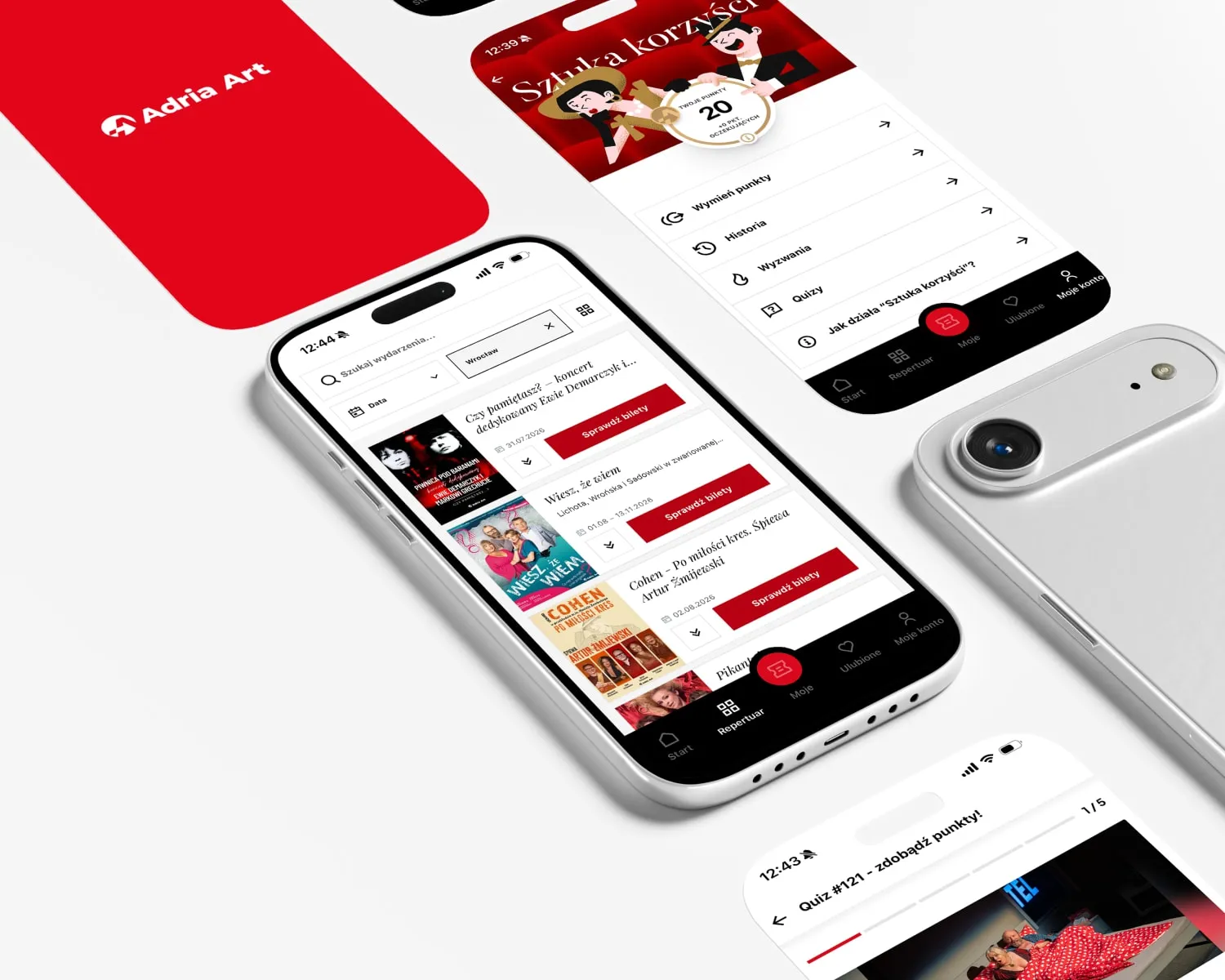
- Repertoire and event pages with filtering by phrase, date, city and category.
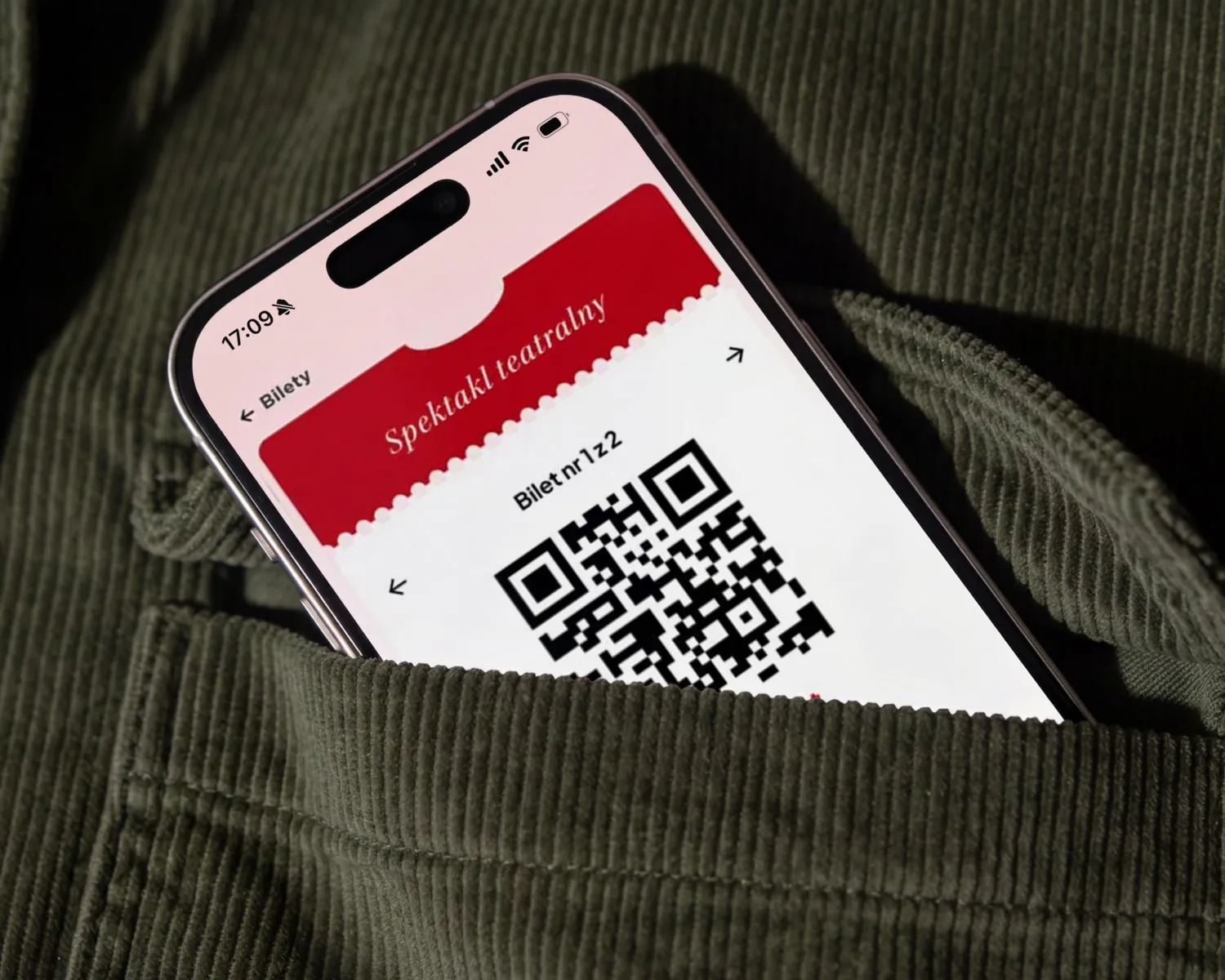
- Tickets with QR codes, split into upcoming and past, plus a ticket alert for events not yet on sale.
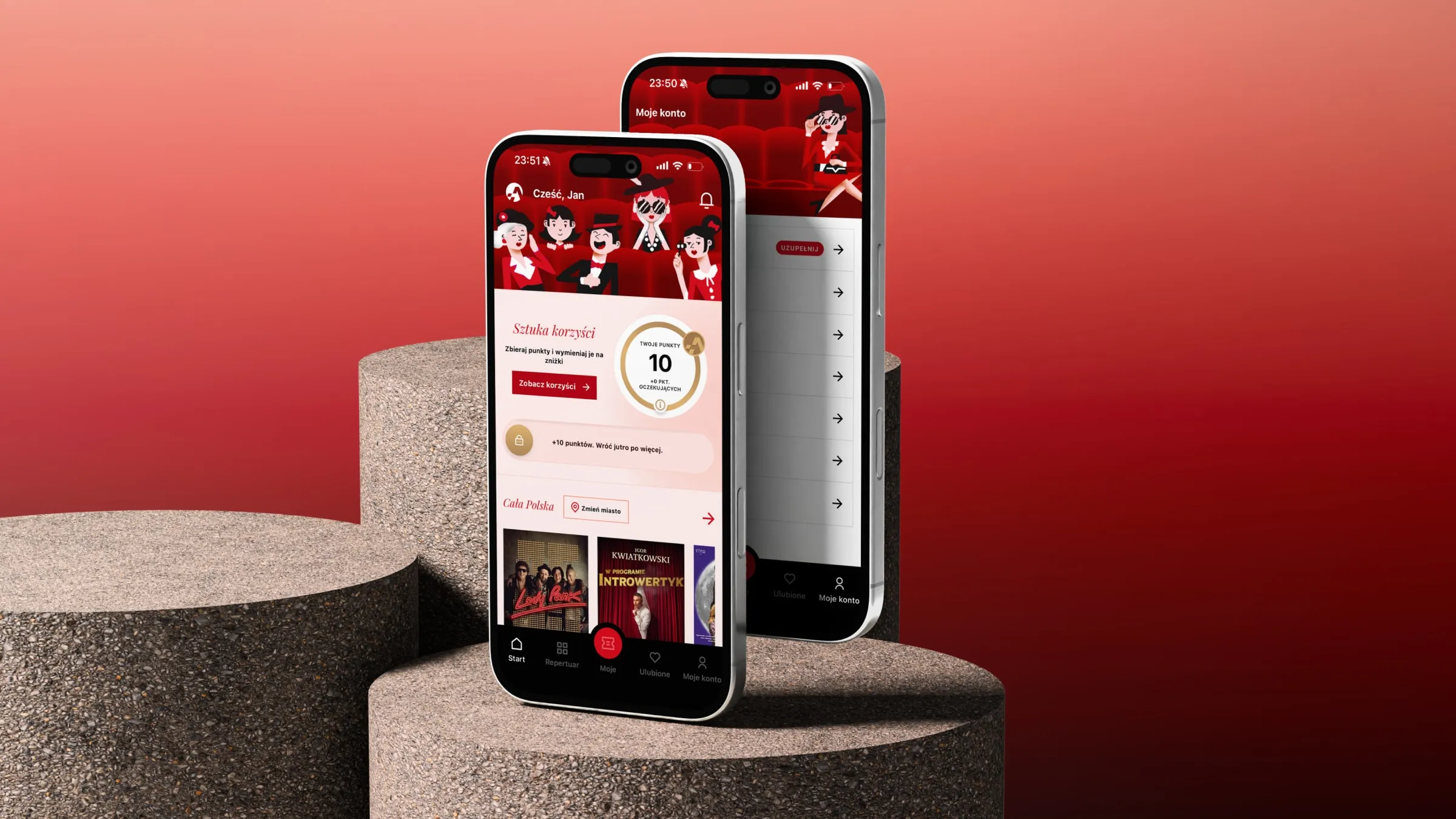
- A loyalty programme with real gamification — points for purchases, daily activity, quizzes, and time-limited challenges, milestone tracking, and vouchers to redeem them against.
- Favourites, so a user can follow events before they’re ready to buy.
- A blog section, FAQ/help, and full account management — login, registration, password reset, and an account deletion process.
- Personalized push notifications with history — tailored to a user’s city and favourite artists, with badges, read/unread state, and deep links straight into the relevant screen.
- Sign-in via Apple, Google, and Facebook, alongside standard email login.
Outcome
Adria Art’s mobile app went from kickoff to a live release on both the App Store and Google Play in about six months — one React Native codebase now runs the full ticket-buying journey, loyalty programme, and push communication natively on iOS and Android.
Development started in January 2026, moved through staged testing — TestFlight on iOS and Google Play’s internal testing track on Android — from April, and reached both app stores in June 2026, not a straight-to-production release. Because the API, authentication, and notification architecture were built as real platform components rather than a thin client, the same brand that manages over 2,500 events a year now has a native channel it can keep extending — new loyalty mechanics, new engagement flows, new screens — without revisiting the foundations.