






Laravel Engineering
Bespoke commerce and business platforms, engineered for logic no template can hold.
Legacy PHP debt where every deploy is a negotiation, not a release.
Bespoke commerce flows — tiered pricing, multi-step approvals, CPQ — that no SaaS platform was built to support.
B2B and B2B2C complexity — contract pricing, role-based access, ERP integrations — still stitched together by hand.
Mature by default. Yours to extend.
Batteries included, not bolted on
Laravel ships first-party answers to the problems every custom platform eventually hits — Horizon for queues, Reverb for real-time, Cashier for billing, Sanctum for API auth. We spend the budget on your business logic, not on reinventing infrastructure.
Complexity stays readable as it grows
Service providers, jobs, events, and policies — plus a mature ORM — give complex B2B rules like tiered pricing, approvals, and multi-tenant access a structure that stays readable as the codebase grows.
Security that's on by default
CSRF, XSS, and SQL-injection protection, hashed credentials, and rate limiting are built into the framework's defaults — not something we bolt on after an audit.
A hiring pool that outlives the project
Laravel is one of the most widely deployed web frameworks, with a correspondingly deep talent pool. Your team can hire, onboard, and maintain the platform long after we hand it over.
What you get

Custom Laravel platforms: commerce engines, B2B portals, internal tools, and the integration layers that connect them.
A modern, fully-typed stack end-to-end — Laravel, Inertia, React. No legacy baggage carried forward.
AI engineered into your workflows — quoting agents, document classification, routing, support triage.

A codebase small enough for your team to hold in one head. Clean handover, no mysteries.
Is Laravel the right call?
Laravel is the right call when:
Your business logic — tiered pricing, multi-step approvals, CPQ, multi-tenant access — is too specific for any off-the-shelf platform to model.
You're integrating deeply with ERP, CRM, or finance systems, and need a backend that bends to those integrations instead of fighting them.
You need an admin-heavy internal tool or B2B portal running alongside the customer-facing app, sharing the same codebase and data model.
You want a stack with a deep hiring pool and a decade-plus track record, so the platform outlives whoever built it first.
Consider something else if:
You're running standard B2C ecommerce with no unusual business rules — a platform like Shopify or Medusa gets you to market faster with less custom code to maintain.
Battle-tested tools, not custom plumbing
Every custom build eventually needs queues, real-time updates, billing, and API auth. Instead of reinventing them, we build on Laravel's own first-party tools — maintained by the same team that ships the framework.
A live dashboard for Redis-backed queues — job throughput, failures, and retries, visible in real time.
First-party WebSockets for real-time features — live order status, notifications, dashboards — with no third-party service in the loop.
Subscription billing wired straight into Stripe — plans, trials, invoices, and coupons, without hand-rolling a billing engine.
Lightweight, secure API and SPA authentication — the same token layer that powers your React frontend and any future mobile app.
Our process

1 week. We map your business logic and agree on the integration boundaries.

2 weeks. A working app covering the riskiest flow, end-to-end.
8–16 weeks. Modules, ERP and finance integrations, role-based access.

Phased rollout. We're on-call through stabilisation, then we hand over.
Logic too specific for a template? Let's build it properly.
One week of discovery maps your business logic and the integration boundaries — before we write a line of code.

Selected work in this service
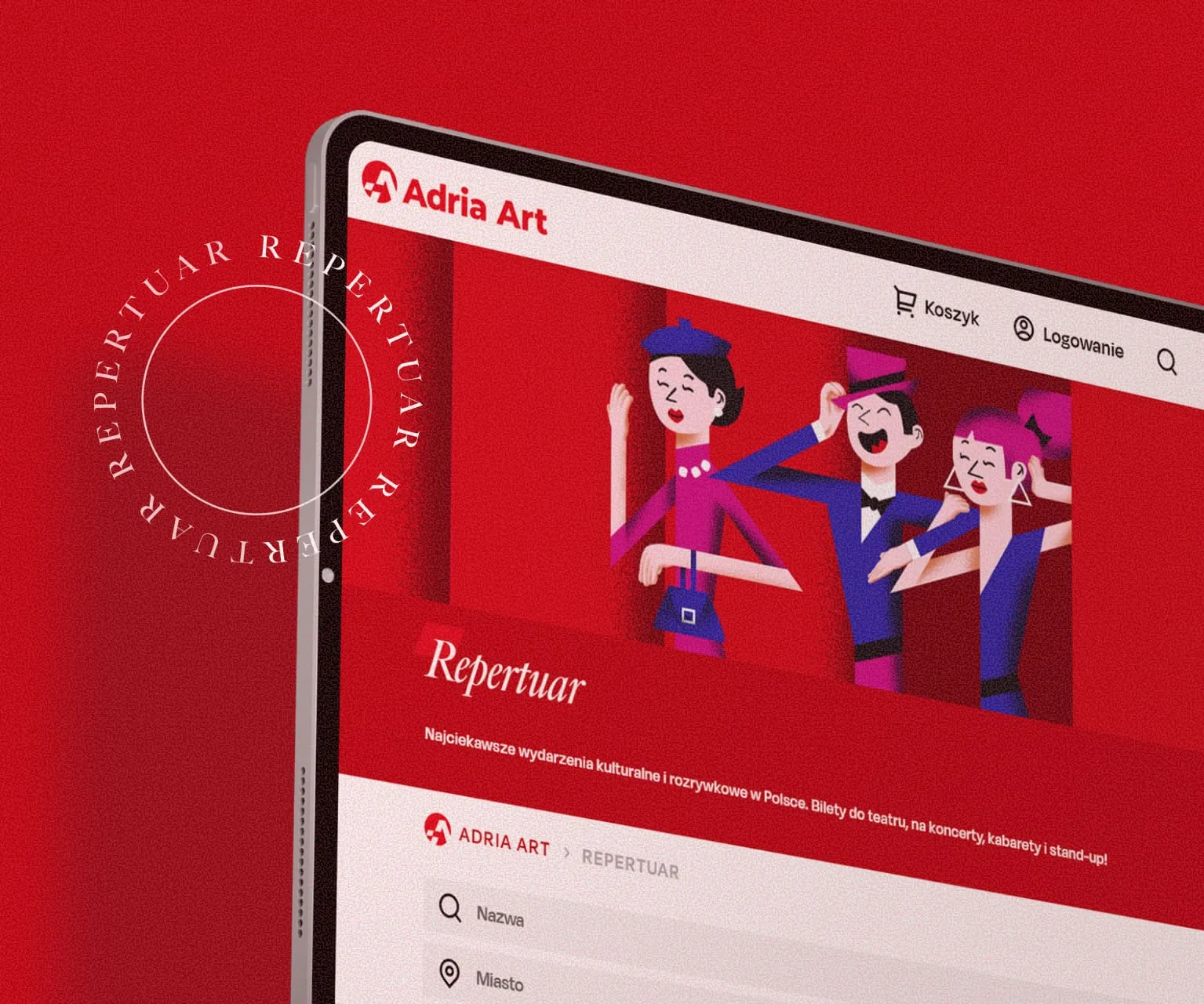
Adria Art, View Case Study
Migration to Laravel technology for one of Poland’s leading event brands' ticketing platform.
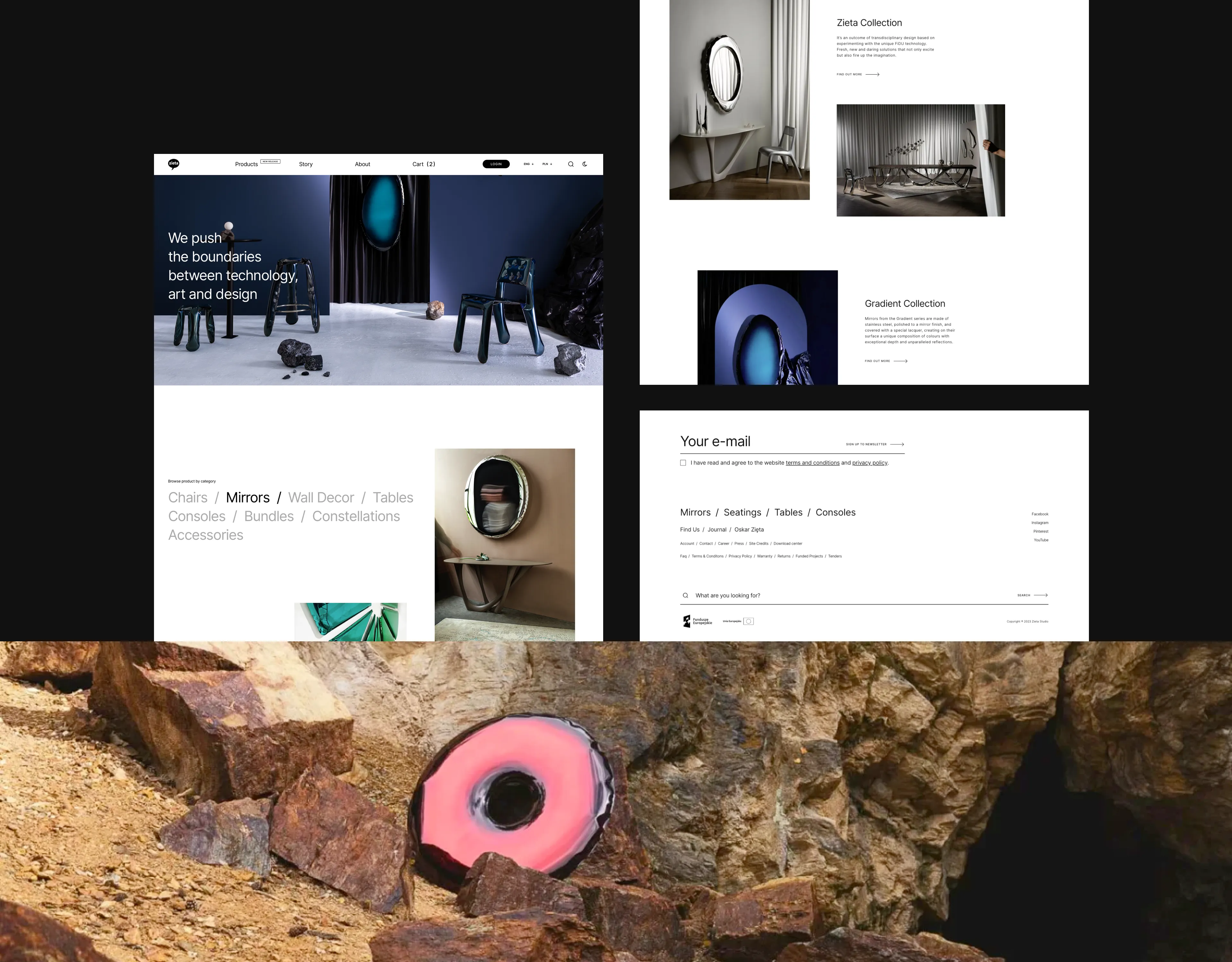
Zieta Studio, View Case Study
Design and development of a new website for a home & decor brand that combines art with bionics, technology and innovation.